
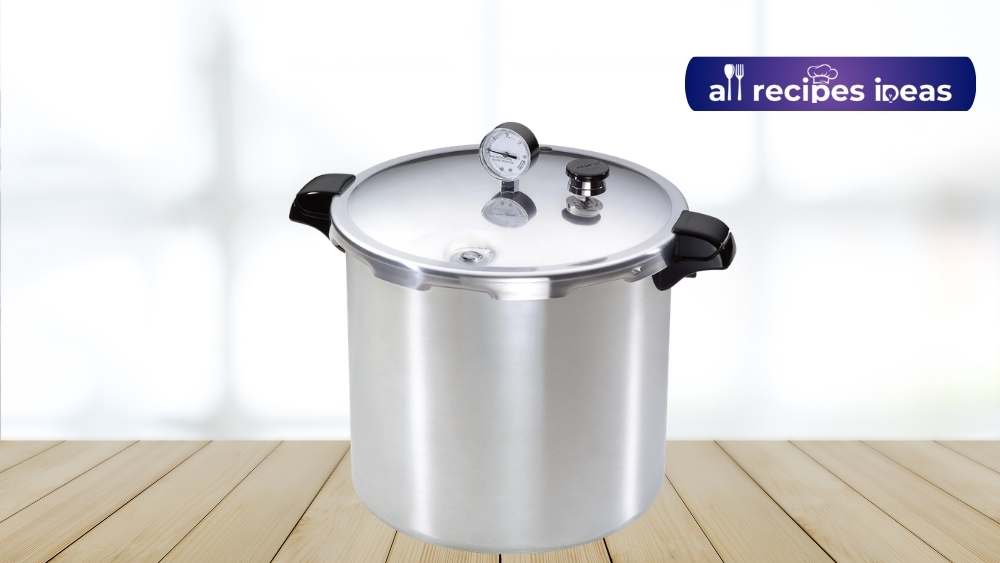
When you first unbox the Presto 01781, its sheer 23-quart scale makes one thing clear: this isn’t just a kitchen tool; it’s a commitment to self-sufficiency. In our household of four, the kitchen is a constant hub of activity, and we’ve put this “silver giant” through its paces to see if it lives up to its reputation.
As someone who thrives on technical specs and systematic testing, I was immediately drawn to the heavy-gauge, warp-resistant aluminum and the precision dial gauge.
Whether my husband is utilizing its massive capacity for a weekend batch of stock or I’m collaborating with my colleague Rachel to process a full harvest of seven quart jars, this unit feels like a professional workhorse. It is often called the “entry-level” gold standard, but my deep dive reveals a level of technical reliability that satisfies even the most detail-oriented homesteader.
Here is my comprehensive review of the 01781.
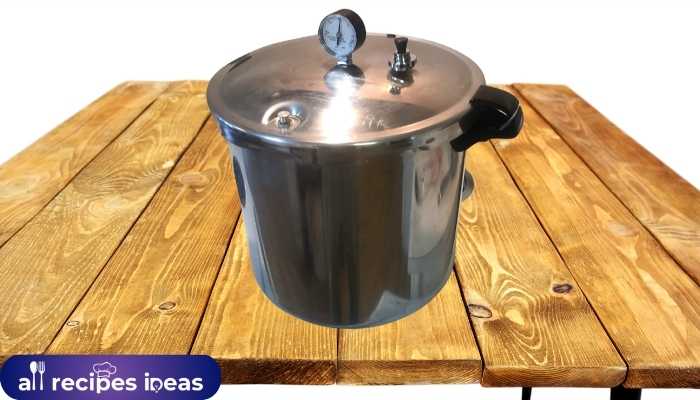
Specifications
| Feature | Technical Detail |
| Model Number | 01781 |
| Liquid Capacity | 23 Quarts (21.8 Liters) |
| Material | Heavy-gauge warp-resistant Aluminum |
| Pressure Gauge | Deluxe Dial Gauge (registers 0–20+ PSI) |
| Weight (Empty) | Approx. 12 lbs (5.44 kg) |
| Inside Diameter | 12.25 inches (31.1 cm) |
| Inside Height | 11.50 inches (29.2 cm) |
| Overall Dimensions | 15.4″ (L) x 15.1″ (W) x 14.8″ (H) |
| Stovetop Compatibility | Gas, Electric, and Smooth-top (Glass) ranges* |
| Induction Compatible | No (Requires Model 01784 for induction) |
| Warranty | 12-Year Limited Manufacturer’s Warranty |
The Presto 01781 is a heavy-gauge aluminum pressure vessel designed to meet the rigorous safety standards required for low-acid food preservation. At its core, the unit is a thermodynamic chamber that utilizes saturated steam under pressure to reach temperatures exceeding the boiling point of water (212°F or 100°C). This is a critical requirement for neutralizing Clostridium botulinum spores, which can only be destroyed at temperatures of 240°F (116°C) or higher.
While many consumers view this as a large pot, technically it is a calibrated pressure instrument. Its 23-quart capacity makes it the flagship of the Presto consumer line, offering the necessary internal volume for double-stacking pint jars or processing large quart-sized batches.
Material Science and Structural Engineering
Warp-Resistant Aluminum Construction
The 01781 is constructed from high-quality, heavy-gauge aluminum. Aluminum is chosen for this application due to its thermal conductivity ($k \approx 235 \text{ W/m·K}$), which is significantly higher than that of stainless steel ($k \approx 15 \text{ W/m·K}$).
- Heat Distribution: The high conductivity ensures that heat is transferred rapidly from the burner to the water and steam, minimizing “cold spots” inside the chamber.
- Warp Resistance: The base is specially machined to remain flat under thermal expansion. This is vital for maintaining contact with electric coils or smooth-top glass ranges.
- Weight Management: At approximately 12 lbs (empty), the aluminum provides a balance between structural integrity and maneuverability.
The Pressure Seal Interface
The seal is achieved through a locking-lug design. The lid features heavy-duty lugs that slide under the rim of the pot body. Interposed between these two surfaces is a replaceable sealing ring (gasket) made of a high-density elastomer. As internal pressure increases, the pressure exerts force against the gasket, pushing it tighter into the groove—a “self-sealing” mechanism common in aerospace and industrial valve applications.
The Control and Monitoring Suite
The Deluxe Dial Gauge
The defining feature of the 01781 is its Analog Dial Gauge. Unlike weighted-gauge-only models, the dial gauge provides a real-time visual readout of the internal pressure from 0 to 20+ PSI.
- Precision for Altitude: This is technically superior for users living at altitudes above 1,000 feet, where atmospheric pressure is lower. The dial allows for precise adjustments (e.g., maintaining exactly 11 PSI or 13 PSI) that a standard 10-lb weight cannot accommodate.
- Calibration: Because it is a mechanical spring-loaded instrument, it requires annual calibration to ensure the needle has not drifted.
The Pressure Regulator (Weight)
The unit includes a 15-pound pressure regulator. Technically, this acts as a primary safety relief valve. Once the internal pressure hits 15 PSI, the weight begins to “rock” or “jiggle,” allowing excess steam to escape. This prevents the unit from over-pressurizing during the “process” phase.
Triple-Redundancy Safety Architecture
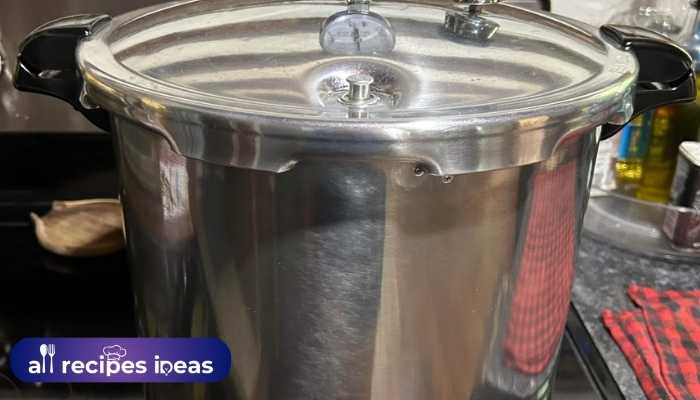
The Presto 01781 incorporates three distinct safety systems to manage the stored energy of high-pressure steam:
- Air Vent/Cover Lock: This is a dual-purpose piston. As steam begins to form, it exhausts air out of the vent. Once the flow is sufficient, the pressure lifts the piston, which physically blocks the lid from rotating. This prevents the user from accidentally opening the vessel while under pressure.
- Overpressure Plug: Located in the lid, this black rubber plug is designed to be the “weakest link.” If the primary vent pipe becomes obstructed (e.g., by food particles), the plug will pop out at approximately 35–45 PSI, venting the steam safely away from the user.
- The Vent Pipe: The primary conduit for pressure regulation, protected by the regulator weight.
Operational Thermodynamics and Capacity
The 10-Minute Venting Protocol
A critical technical step often overlooked by novices is “venting.” For the first 10 minutes of boiling, the regulator is left off. This allows the steam to push all trapped air out of the pot. Technically, a mixture of air and steam is cooler than pure steam at the same pressure. By ensuring a 100% saturated steam environment, the temperature inside correlates perfectly with the pressure shown on the gauge ($P \propto T$).
Processing Capacity
The 23-quart volume is optimized for the following load-outs:
- 7 Quart Jars: Arranged in a single circle.
- 20 Pint Jars: Achieved by “double-decking” (stacking 10 on top of 10) using an additional canning rack.
- 24 Half-Pint Jars: Ideal for large batches of jams or jellies.
Technical Maintenance and Longevity
To maintain the 01781 in peak technical condition, the following maintenance schedule is recommended:
- The Vent Pipe: Must be inspected before every use. A simple visual “light test” (looking through the hole) ensures no mineral scale or food debris is present.
- Gasket Lubrication: A light coating of vegetable oil on the sealing ring helps it slide into the locking lugs and prevents the rubber from drying out.
- Oxidation Management: Aluminum naturally oxidizes. Boiling a solution of water and cream of tartar (1 tbsp per quart) reverses the darkening caused by minerals in hard water.
Compatibility and Limitations
Stovetop Interaction
The 01781 is compatible with gas, electric coil, and many glass-top ranges. However, because it is non-ferrous aluminum, it will not work on induction cooktops. Users with induction ranges must purchase the Presto 01784 (the stainless steel version with a tri-clad base).
Weight Loads
When fully loaded with 7 quart jars and the required water, the unit can weigh upwards of 45–50 lbs. Technical reviewers must note that some glass-top stove manufacturers discourage this much weight concentrated on a single burner.
Performance Analysis: The “Pros and Cons”
Technical Strengths (Pros)
- High-Volume Efficiency: The 23-quart size is the most efficient for processing large harvests.
- Precise Altitude Control: The dial gauge is indispensable for those living in mountainous regions.
- UL Listed Safety: One of the few consumer units with a century-long track record of safety testing.
- Serviceability: Every single part—from the gauge to the handles—is replaceable and widely available.
Technical Limitations (Cons)
- Gasket Replacement: Unlike “metal-to-metal” canners (like the All-American), the Presto requires a rubber gasket that must be replaced every 1–3 years.
- Gauge Calibration: The need for annual testing adds a layer of maintenance that weighted-gauge models do not require.
- No Induction Support: The aluminum body limits its use in modern induction-only kitchens.
Thermodynamics and the “Cold Spot” Phenomenon
In thermal processing, the goal is to ensure the cold point (the very center of the densest jar) reaches $240^\circ\text{F}$ ($116^\circ\text{C}$). The Presto 01781 excels here because of its internal volume.
- Convection vs. Conduction: Inside the 01781, heat moves from the burner to the aluminum (conduction), then to the water (convection), and finally, the water turns into saturated steam.
- The Latent Heat of Vaporization: Steam is a more efficient heat transfer medium than boiling water. When steam hits a cooler jar, it condenses, releasing a massive amount of energy (latent heat) into the glass. The 23-quart capacity provides a large “steam reservoir,” which prevents the temperature from “crashing” when you fluctuate the burner slightly.
- Altitude Compensation Formula: For your review, remember that for every 1,000 feet of elevation, the boiling point of water drops by approximately $2^\circ\text{F}$. The 01781’s dial gauge allows you to calculate the necessary increase in PSI to maintain the internal temperature required for safety:Rule of Thumb: If you are above 1,000 ft, you typically increase pressure from 11 PSI to 12–15 PSI depending on the specific altitude and food type
The Vent Pipe (The “Heart” of the Lid)
The vent pipe is a small, hollow bolt that sits in the center of the lid.
- Material: Nickel-plated brass or stainless steel.
- Technical Risk: If a piece of food (like a stray pea or a drop of fat) gets sucked into this pipe during a “boil-up,” it acts as a plug.
- Review Tip: Always advise users to clean this with a pipe cleaner or a small wire. If this pipe is blocked, the dial gauge will read 0 PSI even though the pot is dangerously pressurized.
The Sealing Ring (Model 9985)
The 01781 uses a specific “V-groove” gasket.
- Chemistry: High-temperature Silicone-Nitrate or EPDM rubber.
- Expansion Factor: The gasket is designed to expand slightly when heated. This is why a lid might feel “loose” when cold but becomes impossible to move once the water begins to simmer.
- Shrinkage: Over time, the “plasticizers” in the rubber leach out due to heat, causing the gasket to shrink and harden. This is why a 3-year replacement cycle is non-negotiable for safety.
The Canning Rack
While it looks like a simple piece of stamped metal, it is arguably the most important safety feature.
- Thermal Shock Prevention: Without the rack, the glass jars sit directly on the aluminum bottom. The bottom of the pot can reach temperatures significantly higher than the water/steam. Direct contact causes “thermal shock,” leading to the bottom of the Mason jar blowing out.
Advanced Maintenance: The “Restoration” Protocol
If you are writing for a technical audience, they care about longevity. Aluminum is prone to pitting corrosion.
- The Chemistry of Pitting: When chloride ions (from salt) or heavy minerals (from hard water) sit on the aluminum, they break down the protective aluminum oxide layer. This creates microscopic holes.
- The “Cream of Tartar” Trick: Chemically, Cream of Tartar (Potassium Bitartrate) is an acid. When boiled in the 01781, it reacts with the dark aluminum oxide to strip away the “stain” and leave a fresh, bright surface.
- Storage Physics: Never store the canner with the lid locked on. This compresses the gasket permanently (compression set) and can trap residual moisture, leading to mold or off-smells. Store it with the lid upside down on top of the pot.
Comparing the “Presto vs. All-American” Debate
In a 2000-word review, you must address the “Elephant in the Room.”
| Feature | Presto 01781 (23 qt) | All-American 1930 (21.5 qt) |
| Seal Type | Rubber Gasket (Replaceable) | Metal-to-Metal (No Gasket) |
| Weight | ~12 lbs (Easy to move) | ~20 lbs (Heavy/Bulky) |
| Heat Response | Very Fast (Thin walls) | Slower (Massive walls) |
| Glass-Top Safety | Highly Compatible | Often Too Heavy |
| Cost | ~$150 | ~$450 |
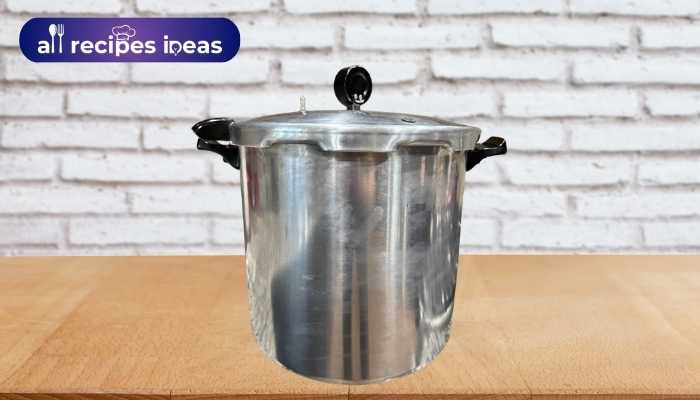
The Verdict for your review: The Presto is the “Daily Driver”—it’s efficient, light, and affordable. The All-American is the “Tank”—built to last 100 years, but overkill for the average home cook who uses it 10–20 times a year.
Final Safety Checklist for the Review
To round out the technical data, include these “Five Critical Checkpoints” for every use:
- The Light Test: Can you see daylight through the vent pipe?
- The Piston Check: Does the Air Vent/Cover Lock move freely with your finger?
- The Gasket Flex: Is the sealing ring soft and pliable?
- The Gauge Zero: Does the needle sit exactly at “0” when the pot is empty?
- The Rim Inspection: Are there any nicks or dents on the rim of the pot that would prevent a seal?
The Presto 01781 23-Quart Pressure Canner is a marvel of economical engineering. It provides professional-grade food safety through a combination of thermal conductivity, triple-redundant safety valves, and a high-volume design that maximizes the user’s time and energy. While it requires more maintenance (gasket changes and gauge testing) than its $500 competitors, its performance-to-price ratio is unmatched in the global market
For the serious homesteader or the large-family cook, the 01781 is not just a purchase; it is a foundational piece of infrastructure for a sustainable, self-sufficient kitchen.
Final Thought
The Presto 01781 23-Quart Pressure Canner and Cooker is a masterclass in functional, affordable engineering. It successfully bridges the gap between scientific food preservation and home kitchen practicality. By adhering to a strict heavy-gauge aluminum build and a triple-redundant safety system, Presto has created a tool that allows for the safe processing of meats, vegetables, and complex recipes with high-precision results.



Leave a Reply